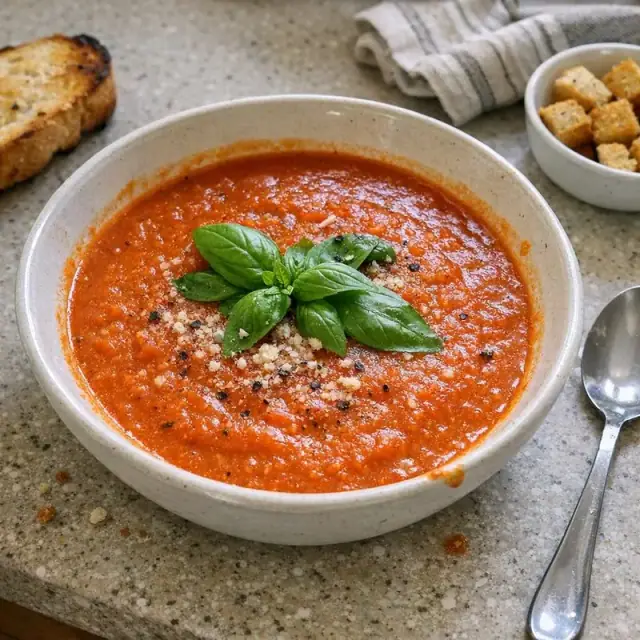
Classic Tomato Basil Soup is a silky, deeply flavored vegetarian soup built from roasted tomatoes, sweet onion, garlic, and a generous handful of fresh basil. Total time is about 45 minutes, and it suits weeknight dinners, meal-prep Sundays, or any afternoon when you want something genuinely comforting without a lot of effort.
What separates this tomato basil soup from the watery, slightly acidic versions you might have had from a carton is one simple technique: roasting the tomatoes before they ever hit the pot. Time in a hot oven concentrates the sugars, deepens the savory notes, and mellows the sharp acidity that raw canned or fresh tomatoes carry. The result is a soup that tastes like it simmered all day, even though it didn't. Add a swirl of cream at the end, a pile of torn basil, and you have something that smells like a summer garden and tastes like the best grilled-cheese companion you've ever encountered.
The texture is the other thing worth mentioning before you even start cooking. Blending hot soup in batches (or using an immersion blender directly in the pot) creates a velvety, restaurant-quality consistency — not chunky, not watery, but smooth with just enough body to coat a spoon. It's the kind of soup that feels luxurious but costs almost nothing to make.
Why You'll Love This Recipe
- Deeply flavorful with simple ingredients. Roasting does most of the heavy lifting. You don't need a long ingredient list to get complex flavor — just good technique.
- Naturally vegetarian and easily vegan. Skip the cream or swap in full-fat coconut milk, and this tomato basil soup is completely plant-based without losing any richness.
- Ready in 45 minutes. That includes roasting time. Active hands-on work is maybe 15 minutes total.
- Makes excellent leftovers. The flavor actually improves overnight as the basil and tomato notes meld together. It reheats beautifully on the stove or in the microwave.
- Endlessly adaptable. Add a parmesan rind while it simmers, stir in white beans for protein, or top it with crispy croutons and a drizzle of pesto. It's a foundation recipe you'll come back to all year.
What You'll Need
This tomato basil soup uses pantry-friendly ingredients, but a few of them deserve a closer look so you get the best possible result.
- Tomatoes (2½ lbs fresh plum or Roma, OR two 28-oz cans whole peeled tomatoes): Fresh plum tomatoes roast beautifully in peak season. Outside of summer, canned whole peeled San Marzano tomatoes are genuinely better than out-of-season fresh — they're picked and packed at peak ripeness. Don't use diced canned tomatoes here; they contain calcium chloride that keeps them firm and prevents them from breaking down smoothly.
- Yellow onion (1 large): Yellow onion has the right balance of sweetness and savoriness. White onion works in a pinch; red onion is too sharp.
- Garlic (6 cloves): Roasted alongside the tomatoes, garlic becomes mellow and slightly sweet rather than pungent. Don't reduce this — it matters.
- Olive oil (3 tablespoons): Use a good-quality extra-virgin olive oil. It's flavoring the soup, not just preventing sticking.
- Vegetable broth (2 cups): Low-sodium broth gives you control over seasoning. Chicken broth works if you're not cooking strictly vegetarian.
- Heavy cream (¼ cup): Stirred in at the end for richness and to balance acidity. Sub coconut cream for a vegan version, or leave it out entirely for a lighter soup.
- Fresh basil (1 large bunch, about 1 cup packed leaves): Added off the heat to preserve its bright, floral flavor. Dried basil is not an adequate substitute here — it tastes flat and medicinal in comparison.
- Tomato paste (2 tablespoons): Cooked briefly in the pot before the broth goes in. This step — called blooming — caramelizes the paste slightly and adds an extra layer of umami depth.
- Sugar (1 teaspoon, optional): A small pinch balances acidity if your tomatoes are particularly sharp. Taste before adding.
- Kosher salt and black pepper: Season at every stage, not just at the end.
- Red pepper flakes (¼ teaspoon, optional): Adds gentle warmth without making the soup spicy.
How to Make Classic Tomato Basil Soup
- Preheat the oven to 400°F. Line a large rimmed baking sheet with parchment paper or foil. This catches caramelized juices that would otherwise bake onto the pan and become nearly impossible to scrub off.
- Prep and roast the tomatoes and aromatics. If using fresh tomatoes, halve them lengthwise and place cut-side up on the baking sheet. If using canned whole tomatoes, drain them (save the juice), halve them, and arrange the same way. Nestle the unpeeled garlic cloves and onion wedges (cut the onion into 6–8 wedges) around the tomatoes. Drizzle everything with olive oil and season generously with salt and pepper. Roast for 30–35 minutes until the tomatoes are deeply caramelized around the edges and the onion is soft and golden. Don't rush this step — the caramelization is where the flavor lives.
- Cool the garlic slightly, then peel it. The skins slip right off after roasting. Squeeze the soft garlic out directly into the pot — it will be jammy and mild, nothing like raw garlic.
- Bloom the tomato paste. Heat a large Dutch oven or heavy pot over medium heat. Add a small drizzle of olive oil, then add the tomato paste. Cook, stirring constantly, for 1–2 minutes until it darkens slightly from bright red to a deeper brick color. This is caramelization, and it adds a savory, almost meaty depth that raw tomato paste doesn't have.
- Add the roasted tomatoes, onion, and garlic to the pot. Scrape every bit of the roasting pan into the pot — those dark, sticky caramelized bits are concentrated flavor. If you used canned tomatoes and reserved the juice, add that now too. Pour in the vegetable broth and stir to combine. Add red pepper flakes if using.
- Simmer for 10 minutes. Bring the soup to a gentle simmer over medium heat and let it cook for 10 minutes. This isn't strictly necessary after roasting, but simmering lets all the ingredients meld and gives the starch from the tomatoes time to thicken the soup slightly. Stir occasionally.
- Blend until smooth. Remove the pot from the heat. If you have an immersion blender, insert it directly into the pot and blend for 60–90 seconds until completely smooth. If you're using a standard blender, work in batches — fill the blender no more than halfway, hold the lid down firmly with a folded kitchen towel, and start on low speed before moving to high. Hot liquid expands when blended and can blow the lid off if you're not careful. Blend until velvety.
- Stir in the cream and basil. Return the blended soup to the pot over low heat. Pour in the heavy cream and stir to combine. Remove from heat, then tear the fresh basil leaves and stir them in. The residual heat will wilt the basil and release its oils without cooking off the aromatic compounds that make it taste fresh. Taste and adjust seasoning — add salt, pepper, or the optional teaspoon of sugar if the soup tastes sharp.
- Serve immediately. Ladle into bowls and finish with a drizzle of good olive oil, a few small basil leaves, and cracked black pepper. A swirl of cream on top looks beautiful and takes about five seconds.
Tips, Variations & Serving Ideas
Make It Vegan
Swap the heavy cream for an equal amount of full-fat canned coconut cream. The coconut flavor is subtle once it's stirred into the tomato base, but it adds the same richness and body. You can also use a splash of cashew cream if you have it on hand.
Add a Parmesan Rind
Drop a saved parmesan rind into the pot during the simmering step. It melts slowly and adds a savory, umami undertone that's hard to describe but immediately noticeable. Remove and discard it before blending. If you're keeping the soup strictly vegetarian, check that your parmesan is made with vegetarian rennet.
Stir In White Beans for Protein
Drain and rinse one can of cannellini beans and add them to the pot before blending. They'll blend right in, thickening the soup and adding plant-based protein without changing the flavor profile. This turns the tomato basil soup into a more substantial meal. It pairs well with crusty homemade bread on the side.
Topping Ideas
Beyond the classic cream swirl and basil, consider: garlic croutons, a spoonful of basil pesto stirred in at serving, freshly grated parmesan, or a drizzle of hot honey if you like a sweet-heat contrast. A grilled cheese sandwich alongside is never wrong — in fact, if you enjoy this soup regularly, you might also love a caramelized onion grilled cheese as a pairing.
Storage and Reheating
Store leftover tomato basil soup in an airtight container in the refrigerator for up to 5 days. The flavor genuinely improves after 24 hours. Reheat gently on the stovetop over medium-low heat, stirring occasionally. If the soup has thickened in the fridge (it will), thin it with a splash of broth or water until it reaches your preferred consistency. This soup also freezes well for up to 3 months — freeze it before adding the cream, then stir in fresh cream when you reheat it. This prevents any textural issues that can happen when cream-based soups are frozen.
Make-Ahead Notes
You can roast the tomatoes and aromatics up to 2 days ahead and store them, covered, in the refrigerator. When you're ready to make the soup, just proceed from step 4. The whole process then takes under 20 minutes. This is a genuinely useful strategy for weeknight cooking — do the oven work on the weekend and assemble the soup quickly on a busy Tuesday. For more weeknight-friendly vegetarian ideas, check out this creamy butternut squash pasta that follows a similar make-ahead approach.
Common Mistakes & Fixes
The Soup Tastes Flat or Watery
This almost always means the tomatoes didn't roast long enough, or you used diced canned tomatoes instead of whole. Diced canned tomatoes are treated to hold their shape, which works against you in a blended soup. Next time, go whole (fresh or canned whole peeled). If you're in the middle of making it right now and it tastes thin, simmer it uncovered for 10–15 more minutes to concentrate the flavor, then season again before serving.
The Soup Is Too Acidic
Tomatoes vary in acidity depending on the variety and the season. If the finished soup tastes sharp or mouth-puckering, stir in that optional teaspoon of sugar — it doesn't make the soup sweet, it just lifts the acidity into balance. A pinch of baking soda also works (it's a base and neutralizes acid chemically), but add it very slowly, a tiny pinch at a time, because it makes the soup foam vigorously and can easily be overdone.
Blender Explosion
Hot liquid expands into steam inside a sealed blender jar. If you fill the blender too full or clamp the lid down too tightly without an escape route, the pressure builds and blows the lid off — usually right into your face and ceiling. Fill the blender no more than halfway, remove the center cap from the lid, and cover the opening with a folded kitchen towel instead. This lets steam escape safely while keeping the soup from splattering. An immersion blender eliminates this risk entirely and is worth the modest investment if you make blended soups regularly.
The Basil Tastes Bitter or Dull
Basil is heat-sensitive. If you add it while the soup is still at a full boil and then blend it at high speed, the heat breaks down the delicate aromatic compounds and can produce a slightly bitter, cooked flavor. Always add fresh basil off the heat (or once the soup has cooled slightly), and use it immediately after tearing or chopping — cut basil oxidizes and turns dark quickly. For a more intense basil hit, reserve a few leaves to add fresh into each individual bowl at serving. If you enjoy bright herb flavors in soups, the red lentil soup with lemon and cumin follows a similar approach to adding fresh herbs at the very end.
Ready to Make a Bowl?
This classic tomato basil soup is one of those recipes that earns a permanent spot in your rotation — it's the kind of thing you'll find yourself making on a cold Tuesday, on a lazy Sunday with a good book, or whenever you need something that feels genuinely nourishing without requiring a ton of effort. The roasting step is what elevates it from ordinary to something you'll want to tell people about, and once you've tasted the difference, you won't skip it.
Give it a try this week, and if you make it, leave a comment below — especially if you tried a variation like the white bean version or a vegan swap. Save this recipe to your Pinterest boards so it's easy to find the next time a soup craving hits, and tag your bowl if you share it. There's genuinely nothing better than seeing a gorgeous, ruby-red bowl of tomato basil soup come to life in someone else's kitchen.
Note: photos on this site are AI-generated illustrations of the finished dish. Recipes are developed from established cooking techniques; adjust seasoning and doneness to taste.